


What are the signs of gum disease?
Gum disease is usually painless, so many people don’t know they have it. Watch for:
- Gums that bleed when you brush or floss
- Red, swollen or tender gums
- Bad breath or a bad taste that won’t go
- Gums pulling back from the teeth
- Teeth that feel loose or have moved
- Pain when you chew
Why do my gums bleed when I brush?
Healthy gums don’t bleed. Bleeding is the most common early sign of gingivitis, and it usually improves within a couple of weeks of a cleaning and daily flossing.
What are the stages of gum disease?
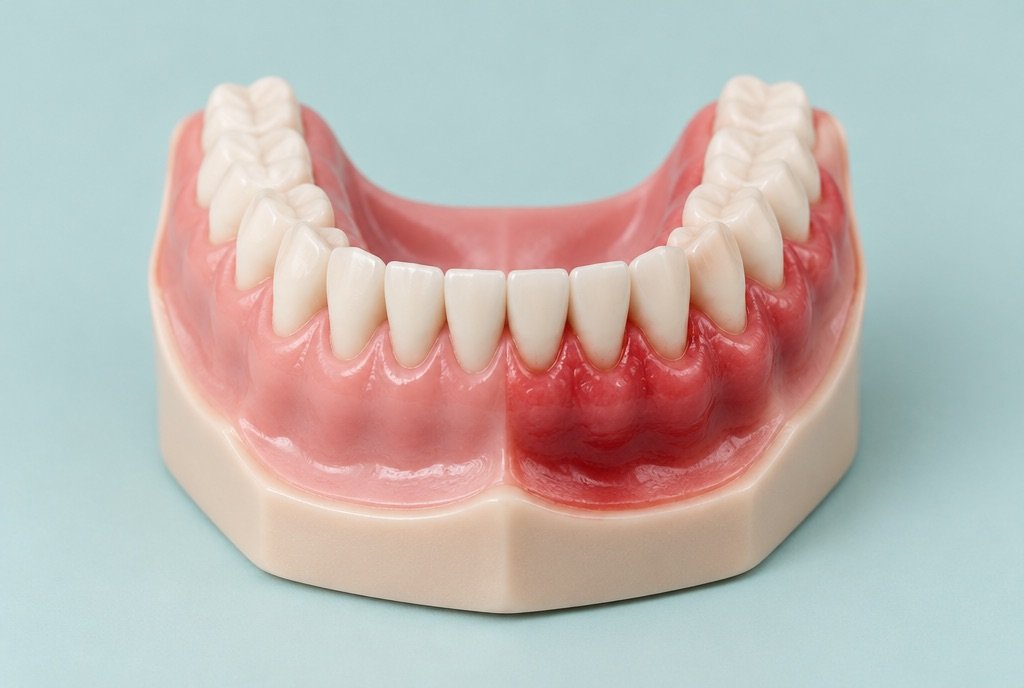
Stage 1
Gingivitis
Plaque inflames the gums, so they look red and bleed easily. The bone and the fibres holding the teeth aren’t damaged yet.
Reversible. A professional cleaning and better daily care usually clear it up.
Stage 2
Periodontitis
The infection moves below the gumline. Pockets form between gum and tooth, and the bone starts to shrink, so teeth can loosen over time.
Controllable. Bone that’s lost doesn’t grow back, but treatment stops it getting worse.
How is gum disease treated?
- Measuring your gums. Dr. Sayeed checks the depth of the pockets around each tooth and takes X-rays to see the bone.
- Cleaning. Gingivitis is treated with a thorough professional cleaning.
- Deep cleaning. Periodontitis needs scaling and root planing, which cleans below the gumline. Read about deep cleaning and gum care.
- Follow-up. Your gums are re-checked and cleaned more often while they heal. Advanced cases are referred to a gum specialist.
Can receding gums be treated?
Treating the gum disease stops further recession. Gum that has already pulled back doesn’t grow back on its own, but exposed roots can be protected if they’re sensitive.
How do you keep gum disease from coming back?
- Brush twice a day with a soft brush, angled toward the gumline.
- Clean between teeth every day with floss or interdental brushes.
- Don’t smoke or vape. Tobacco is one of the biggest risk factors for gum disease.
- Keep diabetes well controlled, as it makes gum infections harder to heal.
- Keep up regular cleanings, every three to six months depending on your gums.
Gum disease questions
Patients come to us from Kingston, Port Ewen, Lake Katrine, Hurley, Saugerties, Woodstock and across Ulster County.
Can gum disease be reversed?
Gingivitis can, usually within a few weeks of a cleaning and good home care. Periodontitis can’t be reversed, but it can be controlled.
Is gum disease painful?
Usually not until it’s advanced, which is why bleeding gums are worth getting checked even when nothing hurts.
Does gum disease cause bad breath?
Yes, it’s one of the most common causes. Read more about bad breath and how it’s treated.
How long does gum treatment take?
A cleaning takes one visit. A deep cleaning is often split into two visits, with a check a few weeks later.
What toothpaste helps with gum disease?
A fluoride toothpaste used twice a day with a soft brush. Some patients are advised an antimicrobial rinse; ask Dr. Sayeed before starting one.