


Signs you may need a root canal
A root canal is needed when decay, a crack or an injury lets bacteria reach the nerve inside the tooth (the pulp).
- Tooth pain that throbs, lingers or wakes you at night
- Sensitivity to hot or cold that stays after the food or drink is gone
- Pain when you bite or chew
- A pimple-like bump or swelling on the gum near the tooth
- A tooth that has turned darker or grey
- A cracked or broken tooth that has started to hurt
What happens if you wait?
An infected nerve doesn’t heal on its own. The pain can fade when the nerve dies, but the infection keeps spreading into the bone and can form an abscess. Antibiotics calm swelling for a while, but they can’t reach inside the tooth, so the infection comes back.
The longer it goes, the more of the tooth is lost, and a tooth that could have been saved may need to come out. If your face is swelling, read what to do in a dental emergency.
Do you need an endodontist for a root canal?
Usually not. At Kingston Smiles NY, Dr. Ibrahim Sayeed, DDS, does most root canals himself, on front and back teeth.
Every dentist is trained to do root canals. An endodontist is a dentist with two or more extra years of training in root canals, who handles the hardest cases. Dr. Sayeed is a general dentist, not an endodontist, and has completed more than 4,000 root canals.
If your X-rays show canals that are unusually curved, blocked or hard to reach, he tells you at the start and refers you to an endodontist. Having your root canal with your own dentist means the same person plans the crown that protects the tooth afterwards. Read more about Dr. Sayeed.
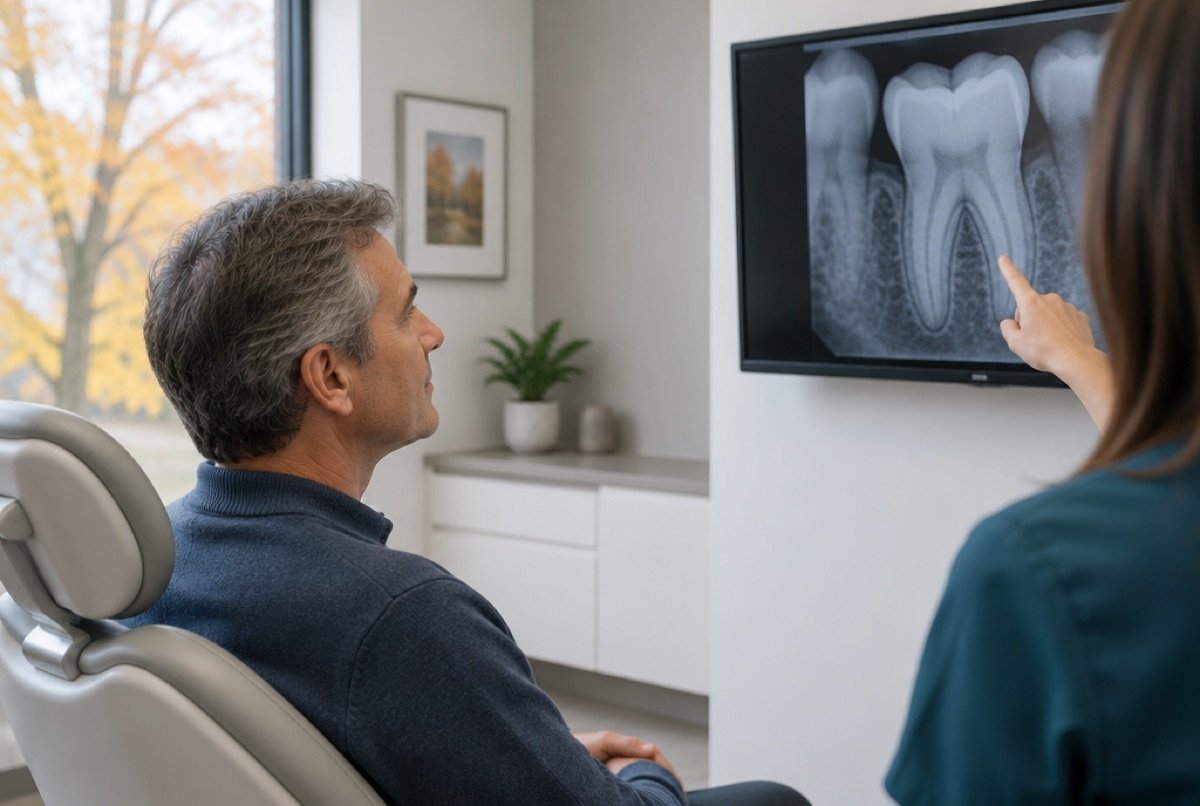
How a root canal works at Kingston Smiles
- X-rays. Digital X-rays show the shape of the canals and how far the infection has spread.
- Numbing. The tooth and gum are fully numbed with local anesthetic before anything starts.
- Cleaning. A small opening is made in the top of the tooth, and the infected pulp is removed and the canals cleaned and disinfected.
- Sealing. The canals are filled with a rubber-like material called gutta-percha and sealed, and a filling closes the opening.
- Protecting the tooth. Most back teeth then need a crown, made by a local lab and fitted at a later visit.
How long does a root canal take?
Usually 60 to 90 minutes, in one visit. A badly infected tooth sometimes needs a second visit, with medicine left inside the tooth in between.
Root canal on a front tooth or a molar: what’s different?
Back teeth have more roots and canals, so they take longer and almost always need a crown afterwards.
| Front tooth | Premolar | Molar | |
|---|---|---|---|
| Canals | Usually one | One or two | Three or four |
| Treatment time | At the shorter end | In between | At the longer end, sometimes two visits |
| Crown afterwards? | Sometimes a filling is enough | Usually | Almost always |
Does a root canal hurt?
Most patients say it feels like having a filling. The pain usually comes from the infection, and treatment relieves it.
During treatment
The area is numb, so you feel pressure and vibration rather than pain. Tell Dr. Sayeed if you feel anything sharp and he will stop.
If you’re nervous
Say so when you book. Each step is explained before it happens, and you can raise your hand for a break at any time.
The first few days
Mild soreness for one to two days is normal and usually settles with over-the-counter pain relievers.
After your root canal
Most people go straight back to work afterwards. These steps protect the tooth until it is crowned.
Eating
Wait until the numbness wears off, so you don’t bite your cheek or tongue. Then choose softer food and chew on the other side.
Until your crown
A temporary filling seals the tooth. Avoid hard or sticky food on that side, and call us if the filling comes out.
When to call us
Call 845-336-5855 if pain gets worse after a few days, swelling appears, or your bite feels high.
How long does a root canal last?
A tooth with a root canal and a crown can last for many years, often for life, with normal brushing, flossing and checkups.
What makes it last: a crown on back teeth to stop them cracking, getting the crown fitted without a long delay, and keeping the gum around the tooth healthy.
Signs a root canal has failed
- Pain or swelling around the tooth months or years later
- A pimple-like bump on the gum near the tooth
- Tenderness when you bite on it
A root canal can fail if bacteria get back in, for example through a crack or a lost filling. The tooth can often be treated again (a retreatment, sometimes done by an endodontist), and if it can’t be saved it is taken out and replaced.
Root canal or extraction?
Taking the tooth out can seem quicker, but the gap usually needs filling later. Dr. Sayeed tells you honestly if a tooth can’t be saved.
| Root canal and crown | Extraction | |
|---|---|---|
| Your tooth | Kept | Removed |
| Healing | Usually a day or two of soreness | One to two weeks for the gum and bone |
| What comes next | A crown to protect the tooth | Often an implant or a bridge to fill the gap |
| Jawbone | Kept in place by the natural root | Can shrink where the tooth was |
| Cost over time | Usually lower | Usually higher once the tooth is replaced |
How much does a root canal cost?
The cost depends mainly on which tooth it is, since back teeth have more canals, and on whether you need a crown. You get the full cost in writing before treatment starts.
- Why costs vary: a molar takes longer than a front tooth, a tooth that has had a root canal before is harder to treat, and a badly broken tooth may need rebuilding before the crown.
- Insurance: most dental plans treat a root canal as a basic or major procedure and pay part of it. We work with CSEA and Kingston Trust Fund plans and most PPO plans, and check your benefits before you commit.
- Is it cheaper to pull the tooth? Only at first. Replacing the tooth with an implant or bridge later usually costs more than saving it.
- Spreading the cost: CareCredit and Cherry let you pay over time.
Root canal questions
Patients come to us from Kingston, Port Ewen, Lake Katrine, Hurley, Rosendale, Rhinecliff, Saugerties and across Ulster County.
Are root canals bad for you?
No. The old idea that root canals cause illness has been disproved by research. A root canal removes infection from your body.
Can antibiotics fix a tooth instead of a root canal?
No. Antibiotics can calm swelling for a while, but they can’t clear infection from inside the tooth. The tooth needs a root canal or an extraction.
Can you do the root canal and crown at the same visit?
No. The crown is made by a local dental lab from a scan of your tooth, so it is fitted at a later visit. A temporary filling protects the tooth meanwhile.
Can I drive after a root canal?
Yes. A root canal is done under local anesthetic, which numbs only your mouth, so you can drive yourself home and go back to work.
What if my tooth has turned dark?
A dark or grey tooth often means the nerve has died. A root canal stops the problem inside, and a crown can restore the color.
Is it an emergency if my tooth is swollen?
Call us the same morning on 845-336-5855. Swelling with a fever or trouble swallowing needs the emergency room. Read what to do in a dental emergency.