


Who are sealants for?
Sealants protect the back teeth, where the chewing surfaces have deep pits and grooves that a toothbrush can’t clean.
- Teens whose back teeth have recently come through
- Adults with deep grooves and no fillings in them
- Anyone who keeps getting cavities despite good brushing
- People with dry mouth from medication
Should adults get dental sealants?
Yes, if a back tooth is healthy but has deep grooves. Age doesn’t matter; what matters is that the surface has no decay or large filling. A tooth that already has a cavity needs a filling instead.
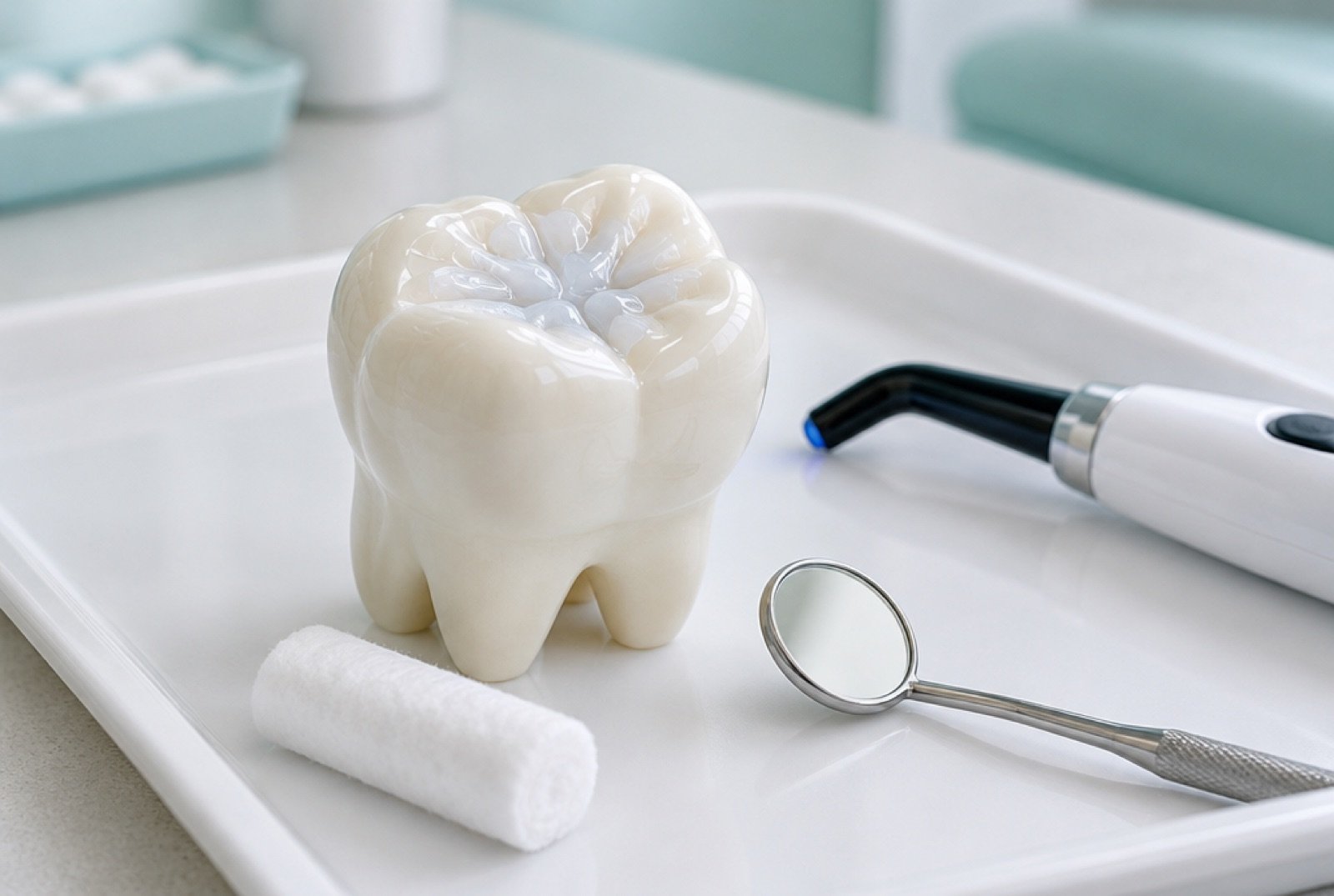
How sealants are placed
- Cleaning. The tooth is cleaned and kept dry.
- Preparing. A mild gel roughens the surface slightly so the sealant grips, then it is rinsed off.
- Painting. The liquid sealant is brushed into the grooves.
- Setting. A curing light hardens it in seconds, and the bite is checked.
How long does it take?
A few minutes per tooth, often during a checkup. There is no drilling or numbing, and you can eat straight afterward.
Sealant or filling?
A sealant protects a healthy tooth. A filling repairs one that already has a cavity.
Dental sealant
- For a healthy tooth with deep grooves
- Nothing is removed from the tooth
- Minutes per tooth, no numbing
- Checked at each visit and topped up if worn
Tooth-colored filling
- For a tooth that already has decay
- The decay is removed first
- Usually done with the tooth numbed
- Read about dental fillings
Sealants pair well with fluoride, which strengthens the smooth surfaces sealants don’t cover.
How long do sealants last?
Usually 5 to 10 years. Dr. Sayeed checks them at every visit, and a worn or chipped sealant is simply repaired or painted on again.
Can cavities grow under sealants?
Rarely, when a sealant is placed over a tooth that is healthy and it stays intact. That’s why the tooth is checked first and the sealant is looked at during each checkup.
Are there downsides to sealants?
The tooth may feel slightly high for a day until the bite settles, and sealants can wear and need topping up. They don’t protect the sides of teeth, so flossing still matters.
How much do dental sealants cost?
The cost depends on how many teeth are sealed. You know it before anything starts.
- Insurance: many plans cover sealants for teens; cover for adults varies, so we check yours. We work with CSEA and Kingston Trust Fund plans and most PPO plans, and check your benefits before your visit.
- Compared with a filling: sealing a healthy tooth is quicker and costs less than repairing a cavity later.
Dental sealant questions
Patients come to us from Kingston, Port Ewen, Lake Katrine, Hurley, Saugerties, Rhinebeck and across Ulster County.
Are dental sealants worth it?
For teeth with deep grooves, usually yes. They take minutes, remove nothing from the tooth and help prevent cavities on the surfaces where most back-tooth decay starts.
Do dental sealants hurt?
No. There is no drilling and no needle. You may notice a sour taste from the preparing gel, and the tooth can feel slightly different for a day.
Why aren’t sealants always covered for adults?
Many plans cover them only up to a certain age. Some cover adults who are at high risk of cavities. We check your plan before treatment.
Are sealants safe?
Yes. Sealants are a long-established, routine preventive treatment, and the amount of material used is tiny.