


Do adults need fluoride treatment?
Not everyone. Fluoride toothpaste is enough for many people. A professional treatment helps when your risk of cavities is higher.
Frequent cavities
New cavities or weak spots at most checkups, despite good brushing.
Dry mouth
Less saliva from medication or a health condition, so teeth lose their natural protection.
Exposed roots
Receding gums uncover root surfaces, which decay faster than enamel.
Crowns and bridges
The edges where dental work meets the tooth are common places for new decay.
Sensitive teeth
Fluoride can ease sensitivity by strengthening worn areas.
Sugary or acidic diet
Frequent snacks, soda, juice or sports drinks soften enamel between meals.
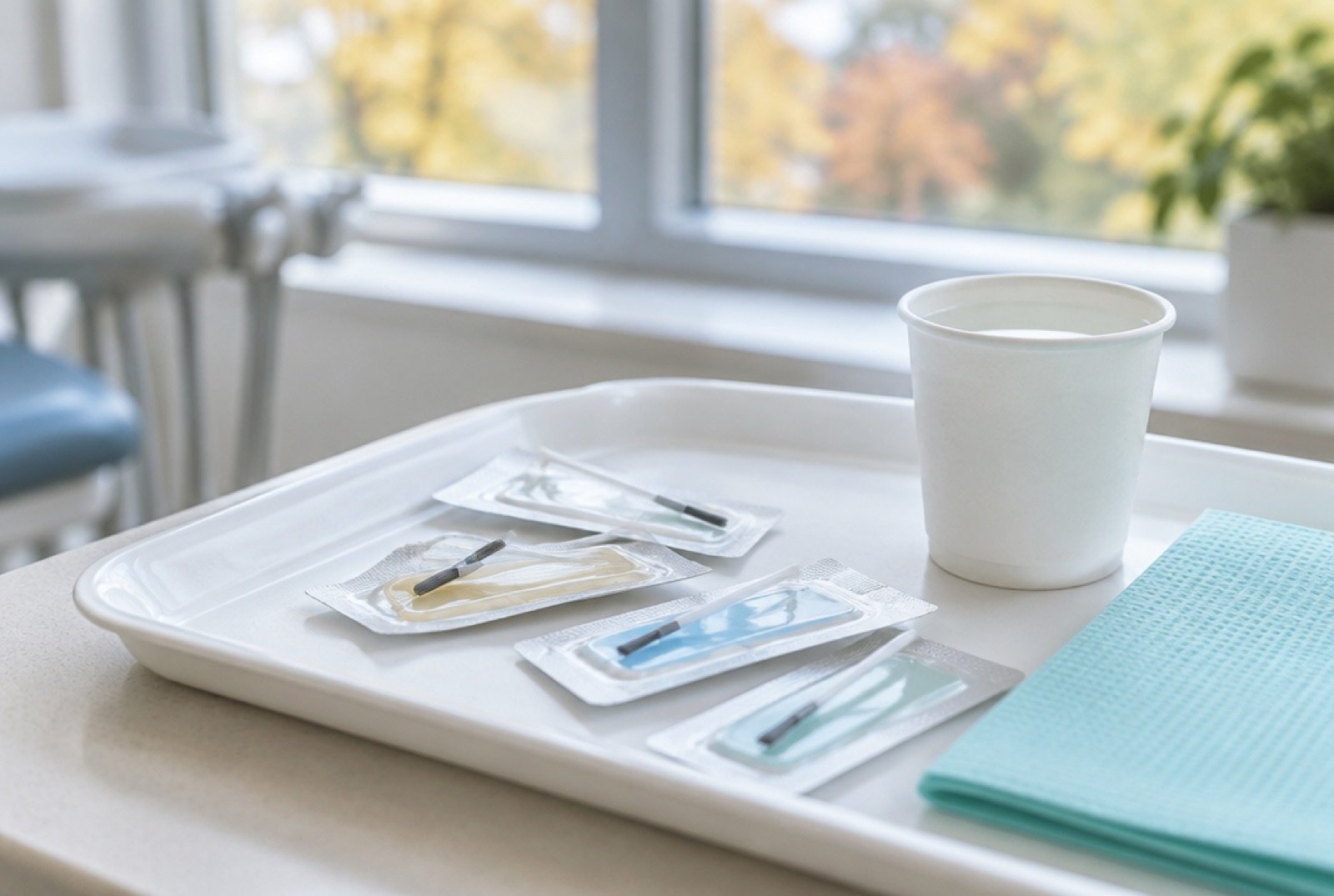
What happens during a fluoride treatment
- After your cleaning. The hygienist dries your clean teeth so the fluoride reaches the enamel.
- Applying the fluoride. A concentrated fluoride is applied to your teeth and left to soak into the enamel.
- Done. The whole treatment takes a few minutes, with no needles or drilling.
Is fluoride treatment worth it for adults?
For adults at higher risk, yes. It can help harden very early weak spots before they become cavities that need a filling. If your risk is low, Dr. Sayeed will tell you that you don’t need it.
How long after fluoride can you eat?
Wait about 30 minutes before you eat, drink or rinse, so the fluoride has time to work.
First 30 minutes
Don’t eat, drink or rinse, so the fluoride stays on your teeth.
Rest of the day
Eat and drink as normal. The team will tell you if there’s anything to avoid.
That evening
Brush and floss as normal, with a fluoride toothpaste.
How often should you get fluoride?
Every six months suits most people who need it, at their regular cleaning, so it never needs an extra trip. Dr. Sayeed may suggest every three months if you get cavities often, have dry mouth or have receding gums.
Between visits, brush twice a day with a fluoride toothpaste and spit rather than rinse, so the fluoride stays on your teeth.
Fluoride or sealants?
Fluoride strengthens every surface of your teeth. Dental sealants physically seal the deep grooves on back teeth. Many people at higher risk benefit from both.
How much does a fluoride treatment cost?
It is one of the simplest treatments we offer. You know the cost before your visit.
- Insurance: many plans cover fluoride for teens, and some cover adults at higher risk of decay. We work with CSEA and Kingston Trust Fund plans and most PPO plans, and check your benefits before your visit.
- Added to a cleaning: it is done at the same visit, so there is no extra appointment.
Fluoride treatment questions
Patients come to us from Kingston, Port Ewen, Lake Katrine, Hurley, Saugerties, Rhinebeck and across Ulster County.
Is professional fluoride safe?
Yes. A small, measured amount of fluoride is applied to the tooth surface, and very little is swallowed.
Can I drink water after a fluoride treatment?
Wait about 30 minutes, then drink as normal.
Does a fluoride treatment hurt?
No. It takes a few minutes, with no needles or drilling.
Can fluoride reverse a cavity?
It can help repair very early enamel damage, before a hole forms. Once there is a cavity, it needs a filling. Read about tooth decay.